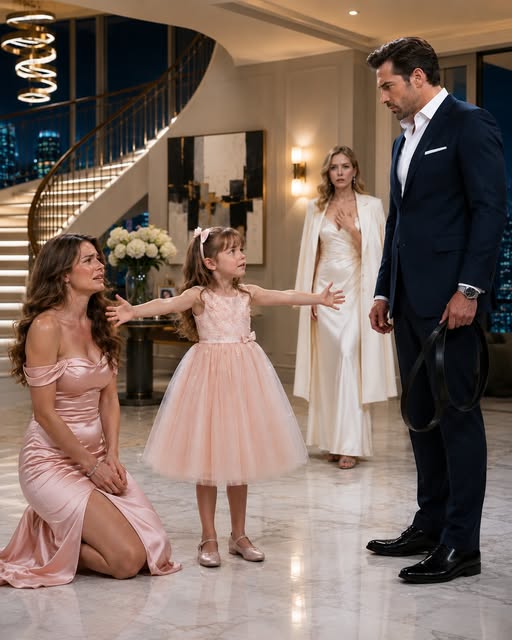
PART 3
For several seconds after the call ended, no one in the hospital room spoke.
The silence felt different from the silences I had known in Russell’s house. Those had been full of caution, the kind that made everyone measure each breath before taking it.
This silence was full of questions.
Grant stood beside the window, his phone still in his hand. Nicholas had stopped pacing. Caleb stared at the dark screen of my phone as though he could force Margaret Fairchild’s voice to return. Samuel folded his arms. Owen remained beside Phoebe’s bed, one hand resting protectively on the rail.
I looked at each of my brothers and felt the same thing I had felt when they first entered the room.
Not rescue.
Belonging.
Grant broke the silence first.
“We need to find Margaret.”
Evelyn was already moving toward the door.
“I’ll call the detective and have them trace the number. If she’s in immediate danger, they need to know now.”
“Tell them Gwendolyn may be with her,” Grant said.
Evelyn nodded and left.
I looked down at Phoebe.
She had fallen asleep again, her small fingers curled around the edge of the blanket. In the pale hospital light, she looked younger than five. Smaller. Softer.
And yet she had told the truth when every adult in the room around her had chosen not to listen.
I leaned down and kissed her forehead just below the bandage.
“You did what I should have done years ago,” I whispered.
Grant heard me.
“You were trying to survive.”
“I was trying to preserve something that had already disappeared.”
He sat beside me.
“You loved him.”
“I loved who I believed he was.”
“That doesn’t make you foolish.”
I looked at him.
“Doesn’t it?”
Grant’s expression did not soften, but his voice did.
“No. It makes you human.”
The words settled somewhere deep inside me.
For years, I had confused regret with guilt. I had treated every painful decision as proof of weakness. But love was not always blindness. Sometimes it was hope held far beyond the moment when it stopped being safe.
The difference mattered.
Phoebe stirred.
Her eyes opened slowly.
“Are we going home?”
The question caught me off guard.
Not to the mansion, I thought.
Never to the mansion.
But I did not want her first memory of leaving her father’s house to be one of fear.
“We’re going somewhere safe,” I said.
“Is it far?”
“A little.”
“Can the uncles come?”
Nicholas leaned over the bed rail.
“You may not be able to stop us.”
Phoebe studied him.
“Are you the funny uncle?”
Samuel made an offended sound.
“That position is already taken.”
“You don’t get to assign yourself,” Caleb said.
Phoebe’s eyes moved from one face to another.
For the first time since the party, she smiled without hesitation.
The sight of it loosened something in my chest.
I had spent years worrying that leaving Russell would break her family.
Sitting there, surrounded by five men who had crossed the country in the middle of the night, I understood something I should have known long ago.
A family could be broken while everyone still lived under the same roof.
And a family could begin healing in a hospital room at dawn.
The doctor returned shortly after sunrise.
Phoebe’s scans showed no serious injury. She would need rest, limited activity, and another examination within twenty-four hours, but she could be discharged later that morning.
Relief moved through the room like fresh air.
Nicholas closed his eyes.
Samuel murmured, “Thank God.”
Owen looked away, pretending to check his phone.
Grant simply put his hand over mine.
The doctor gave instructions, but I had difficulty focusing. After hours of tension, even good news felt difficult to trust.
“What should I watch for?” I asked.
The doctor explained the symptoms that would require immediate attention. Evelyn wrote everything down. Caleb asked practical questions about travel. Samuel asked whether Phoebe could eat pancakes.
The doctor smiled.
“Something light would be fine.”
Phoebe looked at Samuel with immediate approval.
“You are the funny uncle.”
Samuel placed a hand over his heart.
“Justice has been served.”
Even Grant smiled.
The moment was brief, but it carried more warmth than many entire years of my marriage.
At eight o’clock, Evelyn returned with an update.
“The number Margaret called from belongs to a small hotel north of the city.”
“Did the police find her?” I asked.
“The room was empty when they arrived.”
My relief vanished.
“Was there any sign she had been hurt?”
“Nothing visible. Her suitcase was still there, along with medication, clothes, and a train ticket dated three days ago.”
“So she left quickly.”
“Yes.”
“With Gwendolyn?”
“They don’t know.”
Grant’s expression darkened.
“What about surveillance?”
“The hotel is reviewing it now.”
“Did they trace Gwendolyn’s car?”
“It was found in a parking garage near the train station.”
Caleb frowned. “She changed vehicles.”
“Most likely.”
I stared at the floor.
Gwendolyn had always seemed to move through life with perfect confidence. She entered rooms as though they had been prepared for her. She never hurried. Never appeared lost.
But now she was moving from place to place, leaving cars and hotel rooms behind.
It did not feel like confidence.
It felt like fear.
“What if she isn’t running from us?” I said.
Everyone looked at me.
“What do you mean?” Owen asked.
“What if she is running from Russell?”
Grant’s eyes narrowed.
“She stole from him.”
“She also said it wasn’t supposed to happen this way.”
I remembered her voice outside the ambulance. The strain beneath her usual composure.
“What if the dress was supposed to create a scene, not send us to the basement? What if Russell reacted more severely than she expected?”
Nicholas shook his head.
“She blamed a five-year-old.”
“I’m not defending her.”
“You sound like you’re trying to understand her.”
“I am.”
“Why?”
“Because people tell the truth accidentally when their plans fail.”
Grant considered that.
“What truth did she reveal?”
“That she expected something else.”
The room fell quiet again.
I continued.
“She wanted attention on the dress. She wanted access to the conference suite. She wanted the memory card from Phoebe’s crown. But she may not have wanted police, paramedics, and lawyers involved.”
Samuel leaned against the wall.
“So the question is whether she planned this alone.”
“And whether Russell knew about the trust,” I said.
The door opened before anyone could answer.
A hospital security officer stepped in.
“Mrs. Vaughn, your husband is downstairs.”
Every muscle in my body tightened.
“He can’t come up,” Evelyn said.
“He’s not asking to. He says he wants to speak to Mrs. Vaughn’s attorney.”
Evelyn looked at me.
“You do not have to see him.”
“I know.”
“Anything he says can be communicated through me.”
“I know.”
But I also knew Russell.
He did not come to hospitals to surrender control.
He came because something had frightened him.
“Let him speak to Evelyn,” I said. “Not me.”
Grant nodded.
“That’s the right choice.”
Once, I would have felt guilty for refusing to see my husband.
That morning, I felt only tired.
Evelyn left with the security officer.
Phoebe watched the door close.
“Was that about Daddy?”
“Yes.”
“Is he sorry?”
I looked at her.
Children asked the questions adults spent years avoiding.
“I don’t know yet.”
“Did he say sorry to you?”
“No.”
“Then maybe he isn’t.”
Nicholas turned away, hiding his reaction.
I brushed Phoebe’s hair from her face.
“You don’t have to decide what Daddy feels.”
“But he was mean.”
“Yes.”
“Do I still have to love him?”
The question struck harder than anything Russell had said.
I sat on the edge of the bed.
“You never have to pretend to feel something you don’t feel. And you never have to stop loving someone just because they disappointed you. Feelings are complicated.”
“Can I be mad and love him?”
“Yes.”
“Can I be scared and love him?”
I swallowed.
“Yes.”
She thought about it.
“Can I not see him today?”
“Yes,” I said. “You can choose that.”
Her shoulders relaxed.
“All right.”
It was the first decision she had been allowed to make since her birthday began.
It was a small one.
But healing, I realized, often started with small choices being returned.
Evelyn came back twenty minutes later.
She closed the door behind her.
“What did Russell want?” Grant asked.
“He wanted to warn us.”
Nicholas gave a humorless laugh.
“Of course he did.”
Evelyn ignored him.
“He says Gwendolyn emptied a private account overnight. Nearly four million dollars.”
Caleb straightened.
“Company funds?”
“Personal funds tied to the Fairchild acquisition.”
I looked at her. “What does that mean?”
“Russell says the money was held in escrow under an old settlement agreement.”
“With Gwendolyn?”
“With her father.”
The pieces shifted again.
“Her father is alive?” I asked.
“As far as Russell knows, yes. But he has not seen him in six years.”
“Since Aspen,” Grant said.
Evelyn nodded.
Russell had claimed Gwendolyn’s father died before we met.
Another lie.
“How many versions of her life has he given me?” I asked.
No one answered.
Evelyn continued.
“Russell says the second vehicle in Aspen belonged to Charles Fairchild.”
Gwendolyn’s father.
A name I had never heard spoken in Russell’s house.
“What happened to him?” I asked.
“Russell claims he disappeared after the crash.”
“People don’t disappear from car accidents.”
“He says Charles was already under investigation for financial crimes. He believes he used the fire to fake his death.”
Grant’s expression sharpened.
“Was a body recovered?”
“No.”
The word seemed to expand inside the room.
No body.
No death certificate.
No funeral.
Only a story repeated until it became accepted.
“What does Russell say was on the memory card?” I asked.
“He says he doesn’t know.”
“That means he knows.”
Evelyn’s silence confirmed she had reached the same conclusion.
“Why was it hidden in Phoebe’s crown?” Samuel asked.
“Russell claims the crown was delivered to the hotel yesterday morning,” Evelyn said. “He never saw it before the party.”
“But he ordered it,” I said.
“He says Gwendolyn arranged the purchase.”
Of course she had.
Everywhere I looked, another decision I had attributed to Russell carried Gwendolyn’s fingerprints.
The crown.
The guest list.
The dress.
The conference suite.
Perhaps even the birthday party itself.
“Did Russell know the card was there?” Grant asked.
“He says no.”
“Do you believe him?” I asked.
Evelyn met my eyes.
“I believe he is frightened.”
That was not the same thing.
But it was the first truthful description of Russell I had heard.
The man downstairs was not grieving a marriage.
He was afraid of a secret.
By late morning, Phoebe was discharged.
We left through a private exit to avoid reporters gathering near the front entrance. News of police at the Vaughn mansion had already spread, though no details had been released.
Grant arranged for us to stay in a quiet coastal house owned by one of his business partners.
It was not the grand estate in Atlanta.
It was better for now.
The house stood above a narrow beach, with weathered cedar walls and windows facing the Pacific. There were no gates, no marble floors, and no employees moving silently through hallways.
Only wind, waves, and a kitchen that smelled faintly of coffee and salt.
Phoebe walked inside holding Owen’s hand.
“Is this our house?”
“For a few days,” I said.
“Where’s my room?”
Samuel carried her small overnight bag upstairs.
“I found one with a window seat.”
“I want that one.”
“Excellent choice.”
Grant had sent someone to purchase clothes, toiletries, and food. The gesture should have felt impersonal, but every item had been chosen with care.
Soft pajamas for Phoebe.
A yellow sweater because it had always been my favorite color.
The tea our mother used to make when any of us was sick.
I stood in the kitchen holding the familiar blue tin and nearly cried again.
Nicholas noticed.
“Grant remembered.”
“He remembers everything.”
“That’s his most annoying quality.”
From the other side of the kitchen, Grant said, “I can hear you.”
“That’s the second.”
For a moment, I was twenty-one again, sitting at the Walton breakfast table while my brothers argued over burnt toast.
I closed my eyes.
Home was not always a place.
Sometimes it was the sound of people teasing one another without fear.
That afternoon, after Phoebe fell asleep upstairs, Grant joined me on the back deck.
The ocean stretched gray and silver beneath the cloudy sky.
He handed me a mug of tea.
“You should rest.”
“I’m afraid to close my eyes.”
“You’re safe here.”
“I know.”
“But you don’t feel it yet.”
I wrapped both hands around the mug.
“No.”
Grant sat beside me.
For a while, neither of us spoke.
Then he said, “You asked us not to hide things from you.”
“Yes.”
“There is something I need to tell you.”
I turned toward him.
His face had the same expression it wore when he delivered bad news in business meetings. Calm. Precise. Too carefully prepared.
“What is it?”
“After you married Russell, Father investigated him.”
I stared at Grant.
“Our father?”
“Yes.”
“Why?”
“He didn’t trust how quickly Russell wanted you separated from the family.”
“I chose to leave.”
“You chose a marriage. Russell insisted it required giving up everything else.”
I looked out at the water.
“What did Father find?”
“Not enough. Vaughn Enterprises appeared legitimate. Russell’s finances were complicated but not criminal. The one thing that concerned him was the Fairchild acquisition.”
“The one after Aspen.”
Grant nodded.
“Father believed Russell paid far too much for a failing company. He thought the purchase was covering some other transaction.”
“Did he confront Russell?”
“No.”
“Why not?”
“Because you asked him to stay out of your marriage.”
The memory returned sharply.
Our father standing in the library at the Walton estate.
His hand resting on the back of a leather chair.
His voice controlled as he asked whether I truly wanted to marry Russell.
I had accused him of judging Russell for not coming from an old family.
I had told him money had made him suspicious of everyone.
I had said if he could not welcome my husband, I would build a life without him.
He died eight months later.
I never saw him again.
The tea trembled in my hands.
“Did he know about the second vehicle?”
“We don’t know.”
“Did he leave files?”
“Yes.”
Grant looked at me.
“They disappeared after his death.”
A chill moved through me despite the sweater.
“Who had access to them?”
“Family. Staff. Attorneys.”
“And Russell?”
“No.”
But Grant’s tone made me look at him more closely.
“What?”
“Gwendolyn attended Father’s memorial.”
I stood so quickly that tea spilled over the rim of the mug.
“She what?”
“She came with a delegation from Vaughn Enterprises.”
“I wasn’t there.”
“I know.”
Russell had told me travel was not advisable because I was pregnant with Phoebe.
He said my father would have understood.
He said grief would only upset the baby.
I had listened.
And Gwendolyn had gone in my place.
“Did she enter the house?”
“Yes.”
“Was she alone?”
“Not that we know of.”
I walked to the railing.
The waves below struck the rocks in steady white lines.
“She took the files.”
“We cannot prove that.”
“She knew they existed.”
“We don’t know that either.”
“Grant.”
He stood.
“I promised not to hide facts. I’m also not going to turn guesses into truth.”
I looked back at him.
He was right.
That, too, was unfamiliar.
In Russell’s world, suspicion became proof whenever it was useful.
In my family, truth still required patience.
“I’m sorry,” I said.
“Don’t apologize for being angry.”
“I’m angry at myself.”
“Then stop.”
I almost laughed.
“Is that an order?”
“A request.”
“You’re terrible at requests.”
“I’ve been told.”
The back door opened.
Owen stepped outside holding a tablet.
“We found something.”
He placed it on the table.
A paused security image from the hotel filled the screen.
Gwendolyn stood in the seventeenth-floor hallway, her body angled toward the conference suite. The timestamp read 4:26 p.m.
But she was not alone.
At the far edge of the frame, partly hidden by a service cart, stood a man in a hotel uniform.
His face was turned away.
“What am I looking at?” I asked.
“The uniform is wrong,” Owen said.
“It looks normal.”
“The hotel changed its logo last year. His jacket has the old one.”
Grant enlarged the image.
The man wore gloves.
Not cleaning gloves.
Thin black ones.
“He was disguised,” I said.
Owen nodded.
“We checked other cameras. He entered through a loading area forty minutes before the party.”
“Did he leave?”
“No footage shows him leaving.”
My pulse quickened.
“Could he still be inside?”
“The hotel was searched after police arrived. He wasn’t found.”
Grant studied the image.
“Can they identify him?”
“Not from this angle.”
I leaned closer.
There was something familiar in the way he stood.
One shoulder slightly lower than the other.
His left hand resting against the cart.
A silver ring visible beneath the glove.
I had seen that ring before.
Not recently.
In Aspen.
The memory came as a flash.
Snow under headlights.
Smoke drifting across the road.
A man kneeling beside the second vehicle.
A silver ring catching the firelight.
I gripped the table.
“He was there.”
Grant looked at me.
“Who?”
“The night of the fire.”
The image in my mind sharpened.
I had remembered the accident as fragments for years.
Russell unconscious against the steering wheel.
The driver’s door jammed.
Heat against my face.
Someone shouting from the darkness.
I had always believed the voice belonged to a bystander who ran for help.
But the man had not run for help.
He had stood beside the other vehicle.
Watching.
“What did he look like?” Owen asked.
“I never saw his face.”
“What did he say?”
I closed my eyes.
At first, there was only wind.
Then a voice surfaced from memory.
Leave him.
I opened my eyes.
“He told me to leave Russell in the car.”
Grant’s face changed.
“Why?”
“I don’t know.”
“Did Russell hear him?”
“He was unconscious.”
“Did the man try to stop you?”
“No.”
“Then what happened?”
“I pulled Russell out. The engine caught fire. When I turned back, the man was gone.”
Owen pointed to the ring.
“Could this be Charles Fairchild?”
“Possibly.”
Grant took the tablet.
“If Charles is alive, Gwendolyn may be working with him.”
“Or against him,” I said.
We all looked at the image.
The disguised man stood only a few feet from the conference suite.
Close enough to help Gwendolyn.
Close enough to follow her.
Close enough to take the memory card himself.
But Phoebe had seen Gwendolyn put it in her pocket.
So what happened after that?
The answer came sooner than expected.
At three in the afternoon, Evelyn arrived at the beach house carrying a sealed evidence bag.
Inside was Phoebe’s silver crown.
The base had been pried open.
Several stones were missing.
Phoebe was still asleep upstairs, so we gathered around the dining table.
“Where did they find it?” Grant asked.
“In a trash bin near the hotel loading dock.”
“Was the memory card inside?”
“No.”
I touched the plastic gently.
The crown had looked magical beneath the ballroom lights.
Now it looked like what it had always been.
A container.
“Did they find fingerprints?”
“Partial prints. They’re being processed.”
Evelyn opened her portfolio.
“There is more. The trust agreement from the conference suite was not the original.”
“What do you mean?” I asked.
“The original agreement had already been removed.”
Grant frowned.
“Then what was in the suite?”
“A copy altered to appear authentic.”
“Altered how?”
“The listed beneficiary is a foundation called the Aspen Children’s Recovery Fund.”
I stared at her.
“That sounds charitable.”
“It does not exist.”
Samuel sat down slowly.
“So Gwendolyn replaced the documents.”
“Possibly. But there is no footage of her carrying a folder out.”
“Then the man in the uniform took it,” Owen said.
Evelyn looked at him.
“That is one theory.”
“What happens if the false document is accepted?” I asked.
“It won’t be now. The board meeting has been postponed. But before today, it might have transferred control without immediate suspicion.”
“To whom?”
“That is the strange part. The false trust has no named individual beneficiary.”
“Then who controls it?”
Evelyn slid a page across the table.
“The trustee.”
I read the name.
Margaret Fairchild.
Gwendolyn’s mother.
No one spoke.
The woman who had called me in fear was named as the person who would control Russell’s shares.
“Did Margaret know?” I asked.
“We don’t know.”
“She sounded terrified.”
“She may be.”
“Or she may have been acting,” Nicholas said.
I wanted to reject the idea.
Margaret’s tears had sounded real.
But I had once thought the same about Gwendolyn.
I folded my hands in my lap.
“What do we actually know?”
Grant glanced at me, recognizing his own language.
Evelyn answered.
“We know Gwendolyn entered the gift room and the conference floor. We know someone disguised as hotel staff was nearby. We know the crown held a memory card. We know the card is missing. We know the document in the suite was false. And we know Margaret Fairchild was named as trustee.”
“Everything else is interpretation,” I said.
“Yes.”
The discipline of facts steadied me.
I could not heal by replacing Russell’s version of reality with another story built on fear.
I needed patience.
Evidence.
And courage enough to hear truths I might not like.
That evening, Phoebe woke hungry and cheerful.
The brothers took over the kitchen.
It was a disaster.
Nicholas burned the first batch of pancakes. Samuel insisted the smoke detector was overly sensitive. Caleb measured ingredients with the seriousness of a laboratory scientist. Owen let Phoebe add chocolate chips. Grant stood at the stove pretending he had always known how to cook.
I sat at the table and watched them.
Phoebe laughed when Samuel tried to flip a pancake and it landed on the floor.
The sound filled the little house.
No chandeliers.
No ballroom.
No perfect dress.
Only people who stayed.
For the first time since her birthday began, I let myself believe the worst part of the night was over.
Not the mystery.
Not the legal fight.
Not the questions about Russell.
But the belief that Phoebe and I were alone.
That had ended.
After dinner, Grant gave Phoebe one of the books he had sent years earlier.
She climbed onto the couch between him and Owen.
“Read the dragon one.”
Grant opened the book.
His voice, so severe in boardrooms, became warm and patient as he read about a little girl crossing a mountain to return a lost dragon egg.
Halfway through the story, Phoebe fell asleep against his shoulder.
Grant did not move.
Neither did any of us.
The sight was too precious to disturb.
Later, I carried her upstairs and tucked her into bed.
“Mommy?”
“I thought you were asleep.”
“I was pretending.”
“Why?”
“So Uncle Grant would finish the story.”
I smiled.
“He’ll read it again tomorrow.”
“Are we staying with them?”
“For a while.”
“Forever?”
“I don’t know yet.”
She touched the bandage on her forehead.
“Can Daddy get better?”
My heart tightened.
“I hope so.”
“Will he come live here?”
“No.”
She nodded as though she had expected that answer.
“Can he say sorry someday?”
“Yes.”
“Do we have to believe him?”
I sat beside her.
“We can listen. Believing takes time.”
She seemed satisfied.
“Mom?”
“Yes?”
“You’re not scared now.”
It was not a question.
I looked toward the open doorway. Downstairs, my brothers’ voices drifted through the house.
“I’m still scared,” I admitted.
“You don’t look like it.”
“That’s because being brave doesn’t mean fear disappears.”
“What does it mean?”
“It means fear doesn’t get to choose for you.”
Phoebe thought about that.
Then she took my hand.
“I was brave at the party.”
“You were.”
“So were you.”
The certainty in her voice nearly undid me.
I had spent six years believing courage had to look like confrontation.
It could also look like endurance ending.
A phone being unlocked.
A brother being called.
A door being left behind.
“Yes,” I whispered. “I was.”
She closed her eyes.
Within minutes, her breathing became even.
I remained beside her until my phone vibrated.
A message from Russell.
I expected another warning.
Instead, it contained only an address.
Beneath it were six words.
THIS IS WHERE I FIRST MET YOU.
I stared at the screen.
The address was not in Aspen.
It was in Atlanta.
Less than ten miles from the Walton family estate.
A second message arrived.
YOU DON’T REMEMBER. I DO.
My hands turned cold.
I carried the phone downstairs.
Grant read the messages twice.
“Do you recognize the address?”
“No.”
Caleb entered it into a map.
“It’s an old medical rehabilitation center.”
“What kind?” I asked.
He scrolled.
“It closed seven years ago.”
One year before Aspen.
One year before I met Russell.
Or believed I met him.
Owen searched the facility’s name.
His expression changed.
“What?”
He turned the screen toward us.
A photograph showed a brick building surrounded by trees. Beneath it was a list of former directors.
One name stood out.
Dr. Charles Fairchild.
Gwendolyn’s father.
The room seemed to lose all sound.
Grant looked at me.
“Russell says he met you there.”
“I was never a patient there.”
“Could you have visited?”
“No.”
But even as I answered, an old memory stirred.
Not a full memory.
Only an image.
A narrow hallway.
A window covered in rain.
A man sitting alone in a wheelchair.
And my father’s hand on my shoulder.
I gripped the edge of the table.
“I have been there.”
My brothers stared at me.
“When?” Grant asked.
“I don’t know.”
“What do you remember?”
“Father took me.”
“Why?”
“I don’t remember.”
The front doorbell rang.
Every conversation stopped.
Grant motioned for us to remain where we were. Nicholas and Caleb followed him into the entryway.
Through the glass beside the door, I saw a woman standing on the porch.
Older.
Gray-haired.
Wearing the same navy coat I had imagined from her voice.
Margaret Fairchild.
Grant opened the door only a few inches.
“Mrs. Fairchild?”
“Yes.”
“Where is Gwendolyn?”
“I don’t know.”
“How did you find us?”
She looked past him.
At me.
“Heather gave me this address years ago.”
I stepped forward.
“No, I didn’t.”
Margaret’s face crumpled with grief.
“Yes, you did.”
She reached into her coat and removed a small black memory card.
Everyone went still.
“I took it from Gwendolyn,” she said. “Before she could give it to her father.”
“Charles is alive?” I asked.
Margaret looked at me with exhausted eyes.
“Yes.”
“Where is he?”
“I don’t know anymore.”
Grant opened the door wider but did not invite her inside.
“What is on the card?”
Margaret held it out.
“Medical records. Security footage. Recorded conversations.”
“From Aspen?”
“From before Aspen.”
I took one step toward her.
“What does any of this have to do with me?”
She looked at the phone still in my hand.
At Russell’s message.
Then back at my face.
“Because Russell did not first meet you at the rehabilitation center.”
My heart pounded.
Margaret’s fingers closed around the memory card.
“He was a patient there.”
I could barely speak.
“What happened to him?”
She looked toward the stairs, where Phoebe slept.
Then she said the sentence that changed everything I thought I understood.
“Six months before Aspen, Russell Vaughn had no memory of who he was—and your father paid Charles Fairchild to make sure he never remembered why.”
👉 Follow the page and turn on notifications so you won’t miss the next chapter. The story continues in the next post.