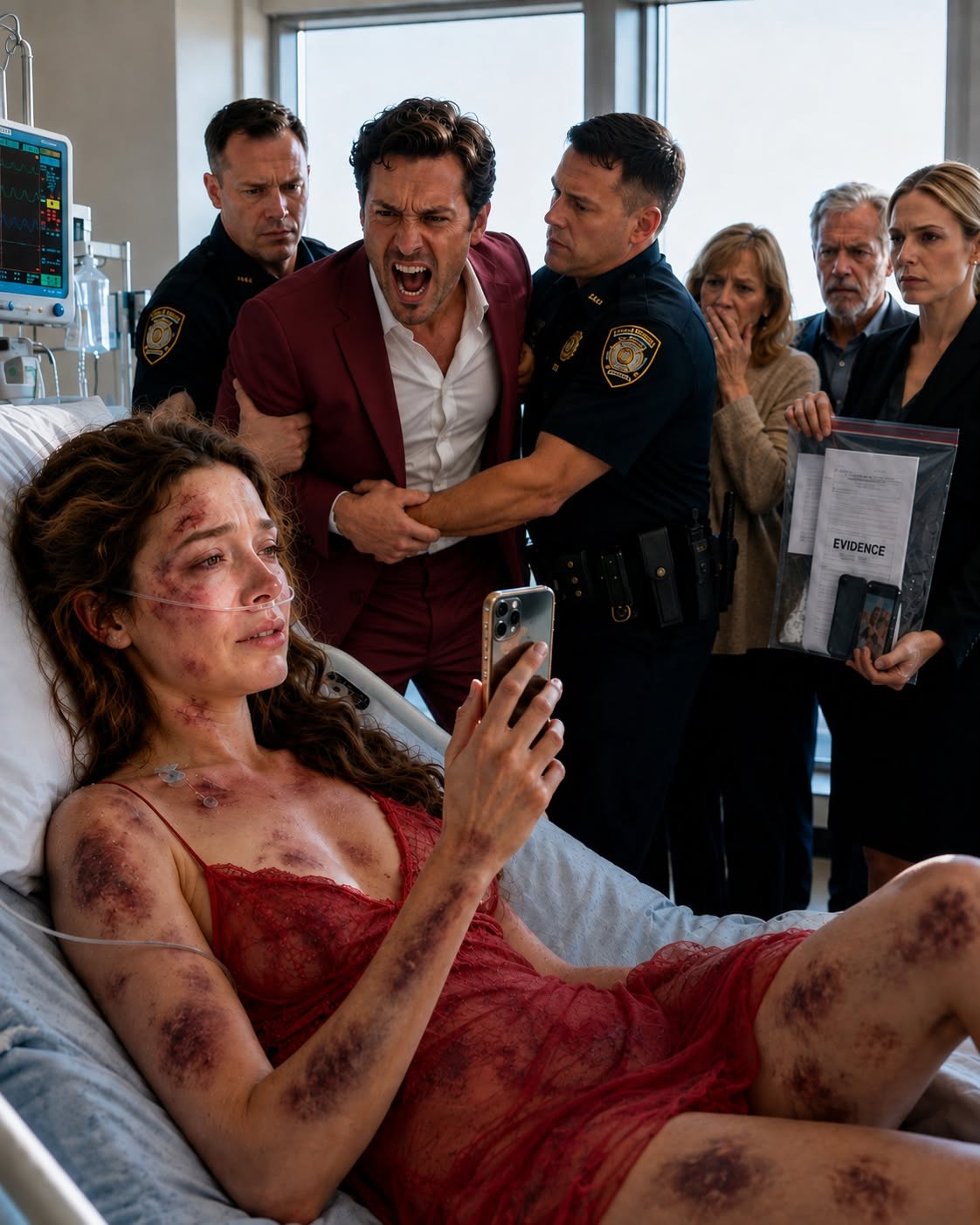

There was no judgment in her voice. No curiosity disguised as concern. She did not ask what I had done to provoke him.
That nearly made me cry.
Instead, I turned my head toward the window. Beyond the glass, the city was reduced to scattered lights and reflections. Somewhere out there, Garrett was probably rehearsing his version of events. Somewhere else, my parents were drinking champagne in anticipation of a house my name had made possible.
I had spent so long protecting everyone from consequences that I had forgotten consequences could protect me.
My phone vibrated.
It was my attorney, Daniel Cho.
I had known Daniel for nearly a decade. We had met when I was a junior associate reviewing a complicated land acquisition. He had been opposing counsel, calm and exacting, with an irritating habit of noticing the one clause everyone else had ignored.
Years later, when I left private practice to become general counsel and compliance officer for Andrews Development, Daniel became the outside attorney I called whenever I needed advice that could not pass through Garrett’s office.
His reply contained only four words.
I’m on my way.
I stared at them until the screen dimmed.
For the first time since waking, I felt something other than pain.
Fear, certainly.
But beneath it was relief.
Daniel arrived shortly after midnight carrying a worn leather briefcase and wearing a navy sweater over a white shirt. He looked as though he had dressed quickly, but nothing about him seemed rushed.
Eva stopped him at the door.
“Ten minutes,” she said. “And she needs rest.”
“Understood.”
He waited until she left before approaching the bed.
The sight of me altered his expression. Only slightly, but I saw it.
Daniel had sat through hostile depositions, emergency injunctions, federal investigations, and a shareholder meeting in which two brothers nearly came to blows over a parking garage. He was not easily shaken.
Now he took off his glasses and cleaned them, though the lenses were already spotless.
“Charlotte,” he said quietly. “Did Garrett do this?”
I looked at the door.
“It’s closed,” he assured me. “And the hospital has restricted access to this floor.”
“Yes,” I whispered.
Daniel closed his eyes for one second.
When he opened them again, he was all precision.
“Has he contacted you?”
“Three calls. Twelve messages.”
“Have you answered?”
“No.”
“Good. Don’t delete anything.”
He pulled a chair close to the bed. “The police spoke to the neighbor who called emergency services. They’ll want a formal statement when you’re medically able. The hospital’s social worker has also documented concerns regarding domestic violence.”
The words sounded clinical. Official. Almost disconnected from the memory of Garrett’s shoe against my ribs.
“Will they believe me?” I asked.
Daniel leaned forward.
“Yes.”
My eyes burned.
He did not add qualifications. He did not say probably or depending on the evidence.
He simply said yes.
“What about the guarantee?” I asked.
“I can notify the lender that you are withdrawing before final underwriting approval, but it may not be as immediate as sending an email. The closing is scheduled for Thursday. Your parents’ mortgage package depends on your personal guarantee and pledged investment account.”
“Can the bank force me to continue?”
“Not if the loan has not closed. But there may be fees, and your parents could claim they relied on your promise.”
“They did rely on it.”
“That doesn’t mean you must expose yourself to a thirty-year obligation while recovering from an assault.”
His voice remained even, but there was steel beneath it.
“And Andrews Development?”
Daniel was quiet for a moment.
“That is more complicated.”
“I know.”
“You built the compliance framework, but Garrett is the majority shareholder.”
“On paper.”
His eyes sharpened.
I shifted, and pain flared beneath my ribs. Daniel waited until my breathing steadied.
“Three years ago,” I said, “when Garrett’s father died, the company was carrying more debt than anyone outside the executive team knew. Two projects had stalled. One lender threatened foreclosure. Garrett needed my family trust as collateral to refinance.”
Daniel nodded slowly. He remembered part of it.
“What I never told you,” I continued, “is that I negotiated a contingent voting agreement. If Garrett breached the company’s conduct provisions in a way that created material legal or reputational risk, control of his voting shares transferred temporarily to an independent trustee.”
Daniel’s hand stopped over his legal pad.
“Who is the trustee?”
“My father.”
He stared at me.
I let out a breath that hurt. “Garrett insisted. He said family should control family matters.”
“And your father signed?”
“Yes.”
“Did he understand what he was signing?”
“He had separate counsel. I made sure of it.”
Daniel sat back. “Charlotte, if your father is the trustee, and your parents are financially dependent on you and socially close to Garrett, that provision may not protect you.”
“I know.”
“Then why mention it?”
“Because my father is not the final trustee.”
Daniel’s eyes narrowed.
“There’s a successor provision,” I said. “If the appointed trustee has a conflict of interest, refuses to act, or benefits financially from Garrett’s continued control, authority passes to the successor.”
“And who is that?”
“You.”
For the first time in all the years I had known him, Daniel Cho looked completely speechless.
I almost smiled.
Almost.
“You never told me,” he said.
“The document was held in escrow by Halpern Fiduciary Services. You would only be notified if the triggering conditions were met.”
“And you believe they are?”
“Garrett assaulted the company’s compliance officer after she questioned an unexplained transfer from a jointly controlled account. If the money is connected to corporate funds, we may also have financial misconduct.”
Daniel stared at the floor.
“I need the exact language,” he said.
“The file is named Hawthorn Protocol. It’s in the encrypted archive.”
“Your message told me to collect all files related to Andrews Development.”
“Yes.”
He looked back at me. “You planned for this.”
Shame moved through me before I could stop it.
“Not for this.”
“For something.”
I turned my face toward the window again.
Two years earlier, Garrett had slammed a door into my shoulder during an argument. The next morning, he brought coffee to bed and cried so convincingly that I ended up comforting him.
That same week, I amended the corporate governance documents.
“I suppose some part of me knew,” I said.
Daniel did not answer immediately.
Then he said, “Knowing enough to prepare isn’t the same as being ready to leave.”
A tear slid toward my ear.
He handed me a tissue without comment.
Before he left, Daniel called the hospital’s social worker and arranged for a patient advocate to sit with me during the police interview. He also had security place Garrett and my parents on the restricted visitor list.
My parents.
Seeing their names written beside Garrett’s felt worse than I expected.
At 1:36 a.m., Garrett sent another message.
Charlotte, I’m terrified. Please answer me. They won’t tell me anything.
At 1:41:
I know you’re angry, but you fell. You were disoriented. Don’t say something you’ll regret.
At 1:53:
We need to protect each other.
I read that message three times.
For years, those words had meant: Protect me from what I did to you.
Now they looked smaller.
Not harmless.
But smaller.
I forwarded every message to Daniel.
Then I turned off the phone.
The next morning, a detective named Mara Lewis came to take my statement.
She wore a gray suit and carried no visible impatience. The patient advocate sat beside my bed, close enough that I could hear the soft rustle of her notebook.
Detective Lewis asked me to begin wherever I could.
So I began with the transfer.
Garrett and I maintained several accounts, but the eighty-thousand-dollar withdrawal had come from one used for household expenses and tax reserves. I had noticed it while reviewing our quarterly estimated payments.
“Did your husband explain the transfer?” Detective Lewis asked.
“No.”
“Had he made similar transfers before?”
“Not from that account.”
“Were you concerned the money had been stolen?”
“I was concerned it had been hidden.”
She let the silence remain for a moment.
Then she asked me what happened next.
I described the kitchen. Garrett’s voice. The first blow. The edge of the island striking my back. The floor beneath my palm when I tried to reach my phone.
I kept my voice flat because emotion made breathing difficult.
When I finished, Detective Lewis closed her notebook.
“Your husband stated that you fell down the stairs after drinking wine.”
“I had half a glass with dinner.”
“The stairs in your home are carpeted.”
“Yes.”
“The paramedics documented blood on the kitchen floor.”
I looked at her.
She continued, “Your neighbor’s security camera also recorded your husband carrying a broken lamp and several pieces of glass from the kitchen to the garage before emergency personnel arrived.”
Garrett had been cleaning.
Even while I lay unable to breathe, he had been cleaning.
My hands began to shake.
The patient advocate placed a warm blanket over them.
Detective Lewis’s tone softened. “I know this is difficult. There’s one more thing. Your neighbor heard shouting before the crash. She could not hear everything, but she heard you ask about money.”
“The transfer.”
“That appears likely.”
“What happens now?”
“We have requested a warrant for the residence. Your husband has not been arrested at this time, but he has been advised not to contact you.”
“He’s already contacted me.”
“Your attorney forwarded the messages.”
She paused. “Some of them may be relevant, especially the message asking you not to say something you would regret.”
I closed my eyes.
For so long, I had believed evidence had to be dramatic to matter. A recording. A witness standing in the room. A confession spoken clearly enough that no one could deny it.
But abuse had always lived in fragments.
A bruise beneath a sleeve.
A broken lamp.
A neighbor who heard one sentence.
A message sent at 1:41 in the morning.
Perhaps the truth did not need to arrive all at once.
Perhaps it only needed to stop being hidden.
By afternoon, my mother had called the nurses’ station six times.
She left two voicemails.
In the first, she sounded offended.
“Charlotte, the hospital says we aren’t permitted upstairs. I cannot imagine why you would give them such instructions. Your father and I are worried sick.”
In the second, her voice was lower.
“The bank contacted us. There seems to be some confusion about the house. Call me immediately.”
Not How are you?
Not Are you safe?
The house.
I listened once, then saved both messages.
Daniel returned that evening with a laptop and a sealed envelope.
“The lender has suspended closing,” he said. “They will not proceed without updated financial support.”
“What did my parents say?”
“They contacted me through their real-estate attorney. They claim you are emotionally impaired due to medication.”
I laughed before I could stop myself.
Pain tore through my side, and the laugh became a gasp.
Daniel stood, alarmed, but I lifted a hand.
“I’m fine.”
“You’re not fine.”
“No,” I admitted. “But I will be.”
He waited until I settled.
Then he opened the laptop.
“I located the Hawthorn Protocol.”
“And?”
“The conduct trigger is valid. The assault, if supported by medical records and the police investigation, creates an immediate basis for review. The unexplained transfer strengthens the argument.”
“Have you been appointed?”
“Not yet. Halpern Fiduciary must first notify your father and give him twenty-four hours to disclose any conflicts.”
“He has several.”
“Yes.”
Daniel slid a document toward me. “There is something else.”
The page displayed a list of recent transfers from Andrews Development’s operating reserve.
Most were ordinary: construction materials, insurance premiums, engineering consultants.
One was not.
Eighty thousand dollars had been transferred to a company called Marlowe Strategic Services.
The date matched the withdrawal from our household account.
“What is Marlowe?” I asked.
“That’s the question.”
“You couldn’t find it?”
“It was formed eleven months ago. Registered agent in Delaware. Mailing address is a private mailbox.”
“Who authorized the payment?”
“Garrett.”
“What was the stated purpose?”
“Acquisition consulting.”
“We haven’t acquired anything this quarter.”
“I know.”
A cold uneasiness spread through me.
“Could it be a personal expense disguised as consulting?”
“Possibly. But there are four other payments.”
He expanded the table.
Twenty-five thousand.
Forty thousand.
Sixty thousand.
Another eighty thousand.
All paid over six months.
“Why didn’t I see these?”
“They were classified under active development costs and allocated across multiple properties. Individually, none exceeded the threshold requiring your secondary approval.”
“He kept them below the limit.”
“It appears so.”
That was not impulsive. It was structured.
Garrett had spent years accusing me of being suspicious, rigid, obsessed with details. Meanwhile, he had designed payments specifically to avoid my review.
“What does Marlowe do?” I asked.
“We don’t know yet.”
“Can you subpoena the records?”
“Not without litigation or law-enforcement involvement. But the board can demand supporting documentation.”
“The board is Garrett, his college roommate, my father, and two investors who rarely attend meetings.”
“Then we may need to move before Garrett controls the narrative.”
A knock came at the door.
Eva entered carrying a small paper bag.
“This was delivered to the front desk,” she said. “Security opened it.”
Inside was a pale blue cardigan.
My cardigan.
The one I had left over the back of a dining chair before dinner.
Folded on top was a note in Garrett’s handwriting.
You always get cold in hospitals.
No apology.
No mention of what he had done.
Just the cardigan, as though remembering that I got cold proved he loved me.
My fingers tightened around the fabric.
Garrett had always been good at small kindnesses after large injuries.
He knew how I took my coffee. He remembered the names of books I mentioned once. He warmed my side of the bed during winter. After every terrible argument, he became attentive in a way that made me question whether the cruelty had been real.
I pressed the cardigan to my face.
It still smelled faintly of our laundry detergent.
For one dangerous second, I wanted my own bed. My own kitchen. The familiar sound of Garrett turning a key in the front door.
Familiarity could disguise itself as safety when you were tired enough.
Daniel reached for the bag.
“May I preserve the note?”
I nodded.
He placed it in a plastic document sleeve.
Eva remained near the bed. “Do you want the cardigan?”
I looked at the soft blue fabric.
“No.”
She took it away without asking why.
That night, I dreamed of my childhood home.
Not the large house my parents hoped to buy, but the small brick house where I had grown up. In the dream, my father stood at the end of the driveway while my mother packed my suitcases into Garrett’s car.
I was twenty-four again, newly engaged, proud of the ring on my hand.
My mother hugged me and whispered, “Don’t come running home over every disagreement. Marriage is hard work.”
In the dream, I asked, “What if I’m afraid?”
She smiled as if I had made a joke.
Then Garrett drove away before I could close the door.
I woke before dawn with tears on my face.
The room was dark except for the green lights of the monitor.
I remembered something my father had said during the call.
You chose him.
It was true.
I had chosen Garrett.
But I had chosen him when he was charming and patient, when he listened to my ambitions and told me he admired strong women. I had chosen the man who brought soup to my office during a flu outbreak and stayed up all night helping me prepare for my first major hearing.
I had not chosen the man who counted how long I spent at lunch with colleagues.
I had not chosen the man who reviewed my phone records.
I had not chosen the man who learned that remorse could reset the clock without changing the behavior.
A choice made without the truth was not a lifelong sentence.
By Thursday morning, I was breathing without supplemental oxygen for short periods.
The closing on my parents’ house did not happen.
My mother called from a new number.
I knew it was her before she spoke.
“What have you done?” she demanded.
My pulse jumped, but I did not hang up.
“I withdrew my guarantee.”
“You cannot make a financial decision like this while you’re drugged and emotional.”
“My attorney has confirmed my capacity.”
“Your father and I have already paid deposits. We sold furniture. We gave notice on our rental.”
“Then speak with your lawyer about your options.”
There was a stunned silence.
I had never told my mother to speak with someone else. I had always been the person who solved things.
“You promised us,” she said.
“I promised before I asked for help and you refused.”
“That is not fair.”
“No,” I said. “It wasn’t.”
Her voice tightened. “Garrett told us you had an accident after an argument. He said you were upset about money and lost your footing.”
“The doctors found bruising around my neck.”
My mother said nothing.
“He fractured my ribs,” I continued. “He punctured my lung.”
“Charlotte—”
“I asked you for a safe place to recover.”
“We were in shock.”
“You told me I had caused his temper.”
“I said you know how intense he can become. That is not the same thing.”
“It is to me.”
My mother began to cry.
Her tears had controlled entire rooms when I was younger. My father would become silent. I would apologize, even when I did not understand what I had done.
Now I listened without rushing to comfort her.
“What will people think?” she whispered.
There it was.
Not What happened to you?
What will people think?
“I don’t know,” I said. “But I’m done organizing my life around that question.”
I ended the call.
My hand trembled afterward, and for several minutes, I felt no triumph. Only grief.
Boundaries did not feel powerful at first.
They felt like loss.
Later that day, Daniel received formal notice from Halpern Fiduciary.
My father had declared no conflict of interest.
“He signed the statement?” I asked.
“He did.”
“He benefits from my guarantee. He has accepted paid advisory work from Andrews Development. Garrett funded his country-club membership through a company networking account.”
“All of which create potential conflicts.”
“So what happens?”
“Halpern requested supporting documentation. Your father has until noon tomorrow to respond.”
“And if he refuses to step aside?”
“We petition the court for an emergency determination.”
I rubbed my forehead. “That could become public.”
“Yes.”
I thought of my mother’s question.
What will people think?
Then I thought of the cardigan.
“Proceed.”
Daniel closed the file but did not leave.
“There’s something you should know about the house search.”
I looked at him.
“The police found the broken lamp in a trash container behind Garrett’s office, not in your garage.”
“He moved it?”
“Apparently.”
“When?”
“Security footage shows him arriving at the office at 2:18 a.m.”
My assault had happened just before ten.
He had gone to the hospital. Played the frightened husband. Answered questions.
Then, sometime after midnight, he had left to dispose of evidence.
The calculation of it chilled me more than his anger.
“They also took his laptop,” Daniel said.
“For the assault?”
“Because Detective Lewis saw your messages about the transfer, and the warrant included financial records potentially connected to motive.”
“Does Garrett know?”
“He does now.”
As if summoned by his name, Daniel’s phone buzzed.
He read the screen.
“What is it?”
“Garrett’s attorney.”
“What does he want?”
“To propose a temporary separation agreement.”
I stared at him.
“Already?”
“Garrett will leave the house. He will pay medical expenses. He will agree not to contact you directly.”
“What does he want in return?”
Daniel’s mouth became a thin line.
“You resign from Andrews Development and waive any right to invoke the Hawthorn Protocol.”
The room seemed to become very still.
“He knows.”
“He knows you’ve requested the files.”
“Did my father tell him?”
“We can’t establish that.”
I thought back to the governance meetings, family dinners, and holidays where business conversations slipped between courses. My father admired Garrett’s confidence. He called him decisive. A natural leader.
Perhaps my father had never read the Hawthorn documents carefully.
Or perhaps he had read them very carefully indeed.
“Reject it,” I said.
“I assumed you would.”
“No counteroffer.”
Daniel nodded.
The following morning, my father arrived at the hospital.
Security called before allowing him upstairs.
“He says he’s alone,” Eva told me. “Do you want to see him?”
Every part of me wanted to say no.
But I needed to understand why he had declared no conflict. I needed to see whether he would look at the bruises and still speak about houses, investments, and company control.
“Ten minutes,” I said.
My father entered carrying no flowers.
He seemed older than he had three days before. His gray hair was uncombed, and there were deep creases beside his mouth.
For several seconds, he stood near the door.
Then his gaze moved to the fading marks around my neck.
His face changed.
“Charlotte.”
I waited.
He pulled the chair closer but did not sit.
“Your mother didn’t tell me it was this bad.”
“She didn’t see me.”
“Garrett said—”
“I know what Garrett said.”
My father looked down at his hands.
“You should not have withdrawn the guarantee without warning us.”
I felt something inside me settle.
There would be no apology. Not yet.
“You should not have refused me a safe place to sleep.”
“You called while your mother was emotional.”
“You were on the phone too.”
“I didn’t understand.”
“I told you I was in intensive care.”
His eyes lifted to mine. “I thought you and Garrett had argued. I thought perhaps things had gotten out of control.”
“They did.”
“You know what I mean.”
“Yes,” I said. “I do.”
He finally sat.
“The bank may keep our deposit.”
“That is between you and the bank.”
“We cannot qualify for another property at our age.”
“I’m sorry.”
His expression sharpened. “Are you?”
“I’m sorry you built plans around money and credit that belonged to me.”
He looked wounded by the sentence.
For years, I had softened facts to preserve his dignity. I had called loans gifts and obligations favors. I had pretended my parents’ luxury purchases were symbols of their success rather than evidence of my support.
“I worked my whole life,” he said.
“I know.”
“I gave you opportunities.”
“I know that too.”
“Then why are you treating us like enemies?”
“I’m not. I’m treating myself like someone worth protecting.”
He leaned back.
The silence between us felt enormous.
Finally, I said, “Why did you declare no conflict under the Hawthorn Protocol?”
His eyes flickered.
Only once.
But I saw it.
“Daniel told you?”
“Halpern notified him.”
My father stood abruptly and walked to the window.
“That agreement was never intended to be used against Garrett during a marital dispute.”
“This is not a marital dispute.”
“The company employs two hundred people.”
“And that is why its chief executive cannot hide payments and assault the compliance officer who questions them.”
He turned. “You think taking control will save the company?”
“I think reviewing the records may save it.”
“You don’t know what Garrett has been dealing with.”
“What does that mean?”
My father pressed his lips together.
“Dad.”
He paced once across the room.
Then he said, “The Riverside project is in trouble.”
I knew the Riverside project. A mixed-use development beside the old freight district. It was supposed to include apartments, retail space, and a public park.
“What kind of trouble?”
“The primary investor withdrew three months ago.”
“That’s impossible. I review investor notices.”
“Garrett replaced the capital.”
“With whom?”
“He didn’t say.”
A pressure began building behind my eyes.
“How much?”
“Nearly six million.”
“And the board was not informed?”
“He said disclosure would create panic.”
“You knew?”
My father sat again, this time heavily.
“I knew part of it.”
“How much is part?”
“Enough to understand why he has been under strain.”
The old excuse, dressed in business language.
Garrett had pressure.
Garrett had responsibilities.
Garrett had reasons.
“And Marlowe Strategic Services?” I asked.
My father’s silence answered before he did.
“You know what it is.”
“No.”
“You recognize the name.”
He looked toward the door.
“Dad, look at me.”
Slowly, he did.
“Marlowe was your grandmother’s maiden name,” he said.
I stared at him.
My father’s mother had died when I was twelve. Eleanor Marlowe Andrews. A quiet woman who kept peppermint candies in every handbag and refused to let anyone raise their voice at the dinner table.
“Who formed the company?”
“I don’t know.”
“Why use that name?”
“I don’t know.”
“Did you receive money from it?”
His face tightened. “No.”
“Did Mom?”
“No.”
“Did Garrett ask you to sign anything?”
“No.”
Each answer came faster than the last.
Not convincing.
“Then what aren’t you telling me?”
My father looked at the monitor beside my bed, as if the green numbers might provide an escape.
Before he could speak, the door opened.
Daniel stood there with Eva behind him.
“Your ten minutes are up,” Eva said.
My father rose.
At the doorway, he stopped.
“Charlotte, whatever you think you’re going to find, be careful.”
“Is that a warning?”
“It’s advice.”
“From my father or from Garrett’s trustee?”
Pain crossed his face.
Then he left.
Daniel waited until the door closed.
“What happened?”
I told him about Riverside, the missing investor, and the Marlowe name.
He listened without interrupting.
When I finished, he opened his briefcase and removed a thin folder.
“Halpern completed its conflict review,” he said. “Your father has been disqualified as trustee.”
“Because of the house?”
“The house, advisory payments, and correspondence showing that Garrett discussed the Hawthorn Protocol with him yesterday morning.”
“So he told Garrett.”
“Yes.”
The confirmation hurt less than I expected.
Perhaps because betrayal became easier to bear once it stopped pretending to be uncertainty.
“Have you accepted the successor appointment?” I asked.
Daniel placed a signed document on the table.
“As of eleven minutes ago, yes.”
“What does that allow us to do?”
“Temporarily suspend Garrett’s voting authority, call an emergency board meeting, secure company records, and authorize an independent financial review.”
For the first time, I allowed myself to imagine the office without Garrett’s voice filling every room.
Not permanently.
Not as revenge.
Just long enough for the truth to enter.
“When is the board meeting?”
“Tomorrow at nine.”
“I’ll attend remotely.”
“You may still be in the hospital.”
“I have attended meetings with the flu, a concussion, and once from the back of a taxi during a flood.”
“This is different.”
“Yes,” I said. “This time I won’t pretend I’m fine.”
Daniel studied me, then nodded.
The emergency meeting lasted forty-three minutes.
Garrett joined from his attorney’s office.
He wore a dark suit and looked rested. His camera framed him from the shoulders up, hiding the man who had stood over me in the kitchen.
For a moment, seeing him made the room tilt.
Then he spoke.
“Charlotte, I am relieved you’re recovering.”
Daniel intervened. “All communication should be directed through counsel.”
Garrett ignored him.
“You’re making decisions based on incomplete information.”
I kept my hands folded over the blanket.
“The board is meeting to discuss financial irregularities and leadership risk,” I said. “Not our marriage.”
“They are not separate.”
“They are now.”
His jaw tightened.
The other board members appeared in small squares across my screen. Garrett’s college roommate looked pale. One investor kept adjusting her glasses. My father’s camera was off.
Daniel presented the Hawthorn trigger, my father’s disqualification, and his own temporary appointment. He then moved to suspend Garrett’s voting control pending an independent investigation.
Garrett’s attorney objected repeatedly.
The outside investors voted in favor.
Garrett’s college roommate abstained.
My father remained silent.
The motion passed.
Garrett did not shout.
That frightened me more than shouting would have.
He leaned closer to his camera.
“You have no idea what you’ve just disrupted,” he said.
Daniel muted him.
By noon, an independent forensic accounting team had access to Andrews Development’s servers.
By three, they identified twelve payments to Marlowe Strategic Services totaling four hundred and thirty thousand dollars.
By five, they found a contract.
Marlowe had supposedly provided “community relations and stakeholder management” for the Riverside project.
The agreement was signed by Garrett.
The service reports were vague, repetitive, and unsigned.
The company’s banking information led to an institution in Virginia.
Daniel called me from the hospital conference room.
“We have a beneficial owner,” he said.
“Who?”
“Not Garrett.”
My stomach tightened.
“Then who?”
He hesitated.
“Your mother.”
For a moment, I thought the medication had distorted his words.
“My mother owns Marlowe?”
“She is listed as the sole member.”
“No.”
“I’m looking at the formation documents.”
“She doesn’t understand corporate filings.”
“Someone prepared them for her.”
“What happened to the money?”
“We’re tracing it.”
I remembered my mother in the background of the phone call, glasses touching, celebrating a house she could not afford.
I remembered her immediate panic when the guarantee disappeared.
“Did my father know?”
“We don’t have proof yet.”
I closed my eyes.
The room smelled faintly of antiseptic and rain from the open window.
All my life, my mother had treated money as something mysterious that appeared when needed. Tuition. Vacations. Renovations. Club fees. She called them family blessings, as if no person had worked, signed, borrowed, or sacrificed to provide them.
“What was she doing for Riverside?” I asked.
“Nothing we can verify.”
“So Garrett paid her.”
“Yes.”
“Why?”
“That is what we need to determine.”
My phone lit up with an incoming call.
Unknown number.
I almost ignored it, but something made me answer.
“Hello?”
At first, there was only breathing.
Then my mother said, “Charlotte, do not let Daniel contact the police about Marlowe.”
Her voice sounded unlike itself.
No tears. No indignation.
Only fear.
“Why is the company in your name?”
“I can explain.”
“Then explain.”
“Not over the phone.”
“I’m in the hospital because Garrett attacked me after I questioned missing money. I am done protecting conversations from documentation.”
“It isn’t what you think.”
“What do I think?”
She inhaled sharply.
“That Garrett was paying me for the house.”
“Was he?”
“No.”
“Then what was he paying you for?”
Silence.
“Mom.”
“I was helping someone.”
“Who?”
Another silence, longer this time.
When she spoke again, her voice cracked.
“Your sister.”
I gripped the phone.
“I don’t have a sister.”
“Yes,” my mother whispered. “You do.”
The rain tapped softly against the hospital window.
I could hear Daniel asking whether I was still there, but his voice seemed far away.
My mother continued.
“Her name is Amelia. She is thirty-two years old. And three months ago, she contacted Garrett.”
END OF PART 2 – LIKE, SHARE AND COMMENT “”THE ENTIRE STORY”” IF YOU WANT TO READ THE FULL STORY.