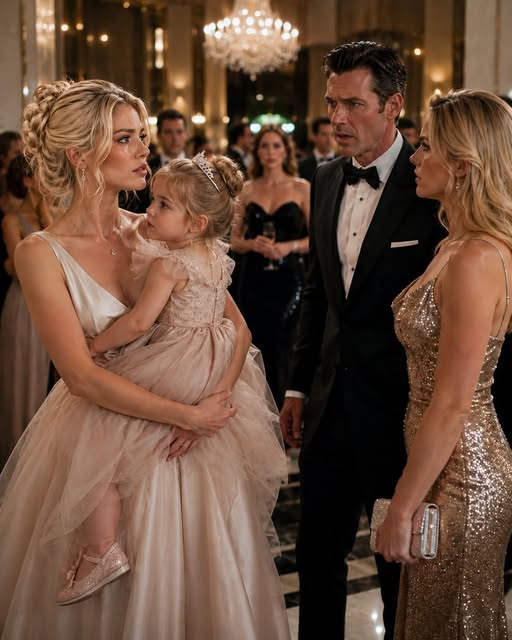

Ethan stared at my robe pocket as if the truth might rise through the silk and accuse him.
For one breath, I wondered whether he would ask.
What are you hiding?
What are you holding?
Why are you smiling like that when I just ended our marriage?
But Ethan Parker had always been skilled at avoiding the question that might make him responsible for the answer.
His gaze lifted back to my face.
“You knew,” he said quietly.
“I heard enough.”
“That wasn’t how I wanted you to find out.”
“No,” I said. “I imagine you preferred a cleaner performance.”
His jaw tightened. “That’s not fair.”
There it was—his first defense. Not that he had been faithful. Not that he had told the truth. Not that I had misunderstood. Only that the timing and tone of his betrayal had somehow been unfair to him.
I stood near the dresser with the pregnancy test hidden beneath my fingers, feeling the faint plastic edges press into my palm.
Two pink lines.
A miracle.
A future.
A reason not to spend one more ounce of strength trying to convince a man to love me with integrity.
Ethan dragged a hand through his hair. “Harper, this hasn’t been easy for me either.”
I looked at him.
Really looked.
At the loosened tie. The expensive watch. The handsome face I had once trusted with the softest parts of myself. He looked tired, but not devastated. Guilty, but not uncertain. He had already chosen the ending. Now he wanted me to help make it painless.
“For you?” I asked.
He flinched.
“I didn’t mean it like that.”
“Yes, you did.”
His eyes hardened slightly. “You’ve been gone for years, Harper. Every conversation became about appointments, cycles, test results, schedules. I felt like a donor, not a husband.”
The word should have wounded me more deeply.
Once, it would have.
But the tiny test in my pocket changed the shape of his accusation. He thought fertility grief had made me obsessive, that my longing for a child had consumed the marriage.
He had not noticed that I had also been lonely.
That I had also missed us.
That I had also waited for him to ask whether I was still in there beneath the injections and bruises and hope.
“You were my husband,” I said softly. “You could have said you were drowning.”
“I tried.”
“No. You withdrew. Then you found someone easier.”
His mouth tightened.
Jessica.
Her name sat between us, perfumed and young and already victorious in the way women become when men promise them stories they have not earned.
“She understands me,” Ethan said.
The sentence was so predictable I almost smiled.
“No,” I replied. “She understands the version of you that doesn’t have to clean up what it breaks.”
Anger flashed in his eyes.
“You don’t know her.”
“I know she took calls from you in our home while I was upstairs.”
He looked away.
That was the first honest thing his body had done all night.
I pulled my hand from my robe pocket without the test. I let the secret remain there, tucked close to my thigh, warm from my palm.
“What happens next?” I asked.
He seemed relieved by the practical question.
Of course he did.
Ethan understood contracts better than emotions.
“The lawyer drafted a separation agreement,” he said. “It’s generous.”
“Generous.”
“I’m not trying to hurt you.”
“You’re leaving me for your assistant on the same night you brought divorce papers into our house.”
He closed his eyes. “I know how it sounds.”
“It sounds accurate.”
A long silence stretched between us.
Downstairs, somewhere beyond the polished floors and glass walls of the house I had designed with more hope than wisdom, Ethan’s phone buzzed. He glanced toward the door involuntarily.
Jessica waiting.
Even now.
The humiliation rose hot and bitter in my throat, but I swallowed it. My child did not need to be born from that moment. Not from pleading. Not from a public tug-of-war over a man who had decided love was too heavy when it required patience.
“Go,” I said.
His head turned back. “What?”
“Call your lawyer. Tell Jessica whatever you need to tell her. Sleep in the guest room or leave tonight. I don’t care.”
He looked stunned.
“You don’t care?”
The question almost made me laugh.
Men like Ethan often mistook a woman’s refusal to collapse for proof that she had never been hurt.
“I care,” I said. “Just not in a way that belongs to you anymore.”
Something moved across his face then.
Fear, maybe.
Not of losing me.
Of losing the familiar power of being the center of my pain.
“Harper,” he said more gently, stepping closer. “We don’t have to make this ugly.”
I stepped back.
It was only one step.
His eyes registered it.
“I won’t make it ugly,” I said. “But I will make it clear.”
The next morning, I called an attorney before I called my mother.
Her name was Marianne Ellis, a family lawyer recommended by a colleague from one of my architecture projects. She answered personally at seven-thirty because she had already read the message I sent through her intake form at dawn.
“Mrs. Parker?” she said.
“Harper Bennett-Parker,” I corrected automatically, then stopped.
My maiden name, Bennett, felt like something I had left folded in a drawer years earlier.
Marianne’s voice was warm but brisk. “Harper. Are you safe?”
The question nearly undid me.
Not “Are you angry?” Not “What did he offer?” Not “Is there proof?”
Are you safe?
“Yes,” I said. “For now.”
“Good. Bring any documents he has given you. Financial statements if you can access them. Do not sign anything until I review it.”
I placed one hand over my stomach.
“There’s something else.”
I thought I would say it immediately.
I’m pregnant.
Instead, the words stuck behind my teeth.
Because once spoken, they would become part of strategy. Custody. Support. Leverage. Risk.
My child had existed for less than a day in my knowledge, and already the world wanted paperwork around her.
“Harper?” Marianne asked gently.
“I found out last night that I’m pregnant.”
The line went quiet.
Then Marianne said, softer, “Congratulations.”
The word hit me with such force I sat down on the edge of the bed.
Congratulations.
Not complications.
Not leverage.
Not timing.
Just congratulations.
Tears slid down my cheeks silently.
“Thank you,” I whispered.
“Does Ethan know?”
“No.”
“Do you intend to tell him?”
I looked toward the bedroom door.
Ethan had not slept in the guest room.
He had left.
His side of the bed was untouched, and the house was full of the vast, ringing silence of a life withdrawing its furniture before my eyes.
“Not today,” I said.
Marianne paused, but she did not judge.
“All right. Then today we focus on protecting you. Later, we decide how and when he is informed in a way that safeguards both you and the baby.”
Both you and the baby.
A pair.
A team.
For the first time since hearing Ethan say I choose you to Jessica, I allowed myself to breathe.
The divorce unfolded like winter—cold, procedural, and slower than grief wanted it to be.
Ethan’s attorneys presented numbers as if numbers were neutral. The house. The accounts. The investments. The vehicles. The art. The fertility expenses he repeatedly tried to frame as marital strain, despite using them later as emotional justification for leaving.
I did not tell him about the pregnancy during the first meeting.
Or the second.
By the third, my nausea had become harder to hide, but grief made an excellent disguise. Ethan interpreted my paleness as heartbreak and, in a way, he was right.
Just not the way he thought.
Jessica moved into his downtown condo before the ink was dry.
She posted carefully angled photos: a coffee cup beside his watch, her hand on the balcony railing, flowers he had probably ordered through an assistant. She never showed his face, but she did not need to. Mutual friends sent screenshots until I asked them to stop.
My mother, Lillian Bennett, flew in from Portland the moment I told her the truth.
She arrived at my door in a raincoat, carrying soup, ginger candies, and the kind of fury only mothers can hold without setting a room on fire.
“He left you while you were pregnant?” she asked, voice dangerously calm.
“He didn’t know.”
“That does not improve my opinion of him.”
I almost smiled.
She touched my face, her anger collapsing into tenderness.
“Oh, my girl.”
That was when I cried fully for the first time.
Not for Ethan.
For the version of me who had held a pregnancy test in the hallway, listening to the father of her child choose someone else.
My mother moved in for three weeks. She cooked meals I could barely eat, sat through appointments, and held my hand when I heard the heartbeat for the first time.
The baby sounded like a galloping horse.
Fast.
Determined.
Alive.
I laughed and sobbed at once.
The ultrasound technician smiled. “Strong little one.”
My mother squeezed my hand.
“She comes from strong women.”
“She?” I asked.
“Mother’s intuition,” she said.
She was right.
At twenty weeks, I learned I was carrying a daughter.
I named her Olivia.
Not after anyone powerful. Not after family expectations or polished tradition.
Olivia because the name sounded like light through leaves.
I told Ethan about her through counsel at twenty-two weeks.
Not with drama.
Not with a photo pressed into his hand in a courthouse hallway.
Marianne sent formal notice: pregnancy confirmed, estimated due date, proposed discussions regarding medical privacy and future parenting arrangements.
Ethan called within seven minutes.
I let it go to voicemail.
Then again.
And again.
Finally, I listened.
His voice sounded wrecked.
“Harper. Is this real? Please call me. Please. I didn’t know. I swear to God, I didn’t know.”
I sat on my bedroom floor beside a half-assembled crib, one hand over my belly while Olivia kicked beneath my ribs.
“I know you didn’t,” I whispered to the silent phone.
That had never been the point.
He sent flowers.
I donated them to the nurses’ station at my obstetrician’s office.
He sent apologies.
I forwarded them to Marianne.
He asked to attend appointments.
I said no until we had a legal framework, boundaries, and proof he understood that fatherhood was not a reward for panic.
Jessica disappeared from social media for six weeks.
Then she returned with a softer image: supportive partner, misunderstood woman, victim of complicated timing. She posted quotes about grace, rebuilding, and how love sometimes hurt others while becoming true.
I did not respond.
Architecture had taught me patience. Good structures were not built by shouting at weak materials. They were built with better foundations.
Olivia was born on a rainy morning in late spring.
Seven pounds, two ounces.
A full head of dark hair.
One furious cry that made the delivery room laugh.
When they placed her on my chest, the world narrowed to warmth, skin, and the astonishing weight of a life that had stayed.
“Hi, Liv,” I whispered.
Her tiny mouth opened against my collarbone.
My mother cried beside me.
Marianne handled Ethan.
He arrived at the hospital three hours later but did not enter my room until I gave permission. When he did, he looked like a man who had walked through every wrong choice and found them waiting at the door.
He stood near the foot of the bed, eyes fixed on Olivia.
“She’s beautiful,” he whispered.
“She is.”
His gaze moved to me.
“Can I hold her?”
The question trembled.
Once, the answer would have been shaped by guilt. By the fear that denying him made me cruel. By the habit of making his feelings larger than mine.
Now I looked at my daughter, sleeping against my chest, and answered from the woman motherhood had already made of me.
“Not today.”
Pain crossed his face.
He nodded.
“Okay.”
That was the first time I saw him accept a consequence without arguing.
It did not repair anything.
But it mattered.
Over the next year, Ethan became a visitor in the life he had almost missed.
Supervised visits became short solo visits. Short visits became afternoons in the park. He learned how to buckle a car seat, how to warm bottles, how to tell the difference between Olivia’s hungry cry and her offended cry. He sent support through the court portal and stopped trying to discuss our marriage during parenting exchanges after Marianne threatened to suspend them.
He also stayed with Jessica.
At first, I expected that to hurt forever.
It did not.
Pain became something less sharp when Olivia laughed.
Jessica, however, remained a shadow around every exchange.
She never came to my building.
She never entered the pediatric appointments.
But I saw her once from a distance, sitting in Ethan’s car across the street while he carried Olivia back to me. Her face looked pale behind the windshield, her smile too fixed when Ethan handed our daughter into my arms.
That was when I began to suspect Ethan had not told her everything.
Not the timing.
Not the calls.
Not the fact that Olivia had existed before he chose Jessica.
People often want the prize without the full history of what it cost.
Two years after the night of the pregnancy test, I received an invitation to the Children’s Harbor Foundation Gala.
It came through my firm, not Ethan. My architecture studio had designed a new pediatric therapy wing for the foundation hospital, a project I had poured myself into with the kind of devotion that once had nowhere to go except marriage and hope.
The invitation included an honor.
Lead Architect Recognition.
My mother read it three times at my kitchen table while Olivia stacked wooden blocks beside her.
“You’re going,” she said.
“I wasn’t debating.”
“You made a face.”
“I was thinking.”
“You think with your eyebrows.”
Olivia looked up. “Eyebows!”
My mother pointed at her. “Exactly.”
I laughed.
Olivia clapped as if she had completed the joke herself.
By then, my daughter was twenty months old, with bright eyes, soft curls, and a personality large enough to rearrange any room she entered. She called blueberries “boo-bees,” refused socks on principle, and greeted every dog as if it were an ambassador from a friendly nation.
Ethan adored her.
That was true.
He was not perfect. He was still impatient sometimes, still prone to solving emotional discomfort with gifts. But Olivia had changed him in ways I could not deny. He showed up. He listened better. He asked before making parenting decisions. He apologized to her when he misunderstood what she wanted.
Once, after dropping her off, he stood in the doorway and said, “You were right not to let me hold her that first day.”
I looked at him, startled.
He continued, “I thought holding her would make me a father. But I needed to become one before my arms meant anything.”
That sentence stayed with me.
It did not make me want him back.
It made me grateful Olivia might know a better version of him than I had married.
I planned to attend the gala alone.
Then the foundation coordinator called three days before the event.
“Drake Hall will have a family-friendly early reception before the formal dinner,” she said. “Several honorees are bringing children for the ribbon display. Since your daughter was part of your inspiration statement, we would love for her to attend that portion if you’re comfortable.”
I looked across the room at Olivia, who was wearing a tutu over pajamas while offering her stuffed bear pretend soup from a measuring cup.
“She’s almost two,” I said.
“We welcome almost two.”
My mother, listening from the sofa, mouthed Go.
So Olivia came.
That evening, Seattle glittered beneath a clear lavender sky.
Drake Hall, with its glass atrium and sweeping staircase, had been filled with white flowers, gold lights, and donors in gowns that cost more than my first car. Photographers waited near the entrance. A string quartet played near the champagne wall. Waiters carried tiny appetizers past displays showing renderings of the new pediatric therapy wing.
I held Olivia on my hip as we stepped inside.
She wore a pale blue dress with a satin ribbon and tiny shoes she had agreed to wear only after my mother called them “gala slippers.” Her curls were pinned back with two pearl clips, though one had already slipped sideways.
“Lights,” she breathed.
“Yes,” I whispered. “Lots of lights.”
My mother walked beside us, elegant in navy silk, eyes misting as she looked at the project display.
“You built something beautiful,” she said.
I looked at the rendering of the therapy wing—the sensory rooms, the garden courtyard, the wide hallways designed for wheelchairs and racing toddlers alike.
“We did,” I said, shifting Olivia higher. “She helped.”
Olivia nodded solemnly. “Help.”
A photographer asked for a picture.
I nearly declined, then decided not to hide.
I stood in front of the rendering with my daughter in my arms and my mother beside me.
Three generations.
No man centered in the frame.
The flash went off.
And across the atrium, Ethan saw us.
I noticed him before he moved.
He stood near the donor wall in a black tuxedo, a glass of water in hand, Jessica beside him in silver. She looked stunning in the way magazines teach women to look stunning—sleek hair, delicate diamonds, perfect posture. Ethan was listening to a board member, but his attention had shifted entirely.
To Olivia.
A smile broke across his face before he could control it.
“Daddy!” Olivia shouted.
Several heads turned.
Ethan excused himself immediately and crossed the atrium.
Jessica followed more slowly.
I felt my mother stiffen beside me.
“It’s all right,” I murmured.
Was it?
I did not know.
But I knew this evening was not about old wounds.
It was about the wing, the children it would serve, and the little girl reaching eagerly toward her father.
Ethan stopped a respectful distance away.
“Hi, Livvy.”
Olivia reached for him. “Up!”
He looked at me first.
Asking.
That still mattered.
I nodded.
He took her carefully, his face softening as she patted his bow tie.
“Fancy Daddy,” she declared.
He laughed.
“Fancy Olivia.”
She pointed toward the lights. “Stars!”
“They do look like stars.”
Jessica reached us then.
Her face had lost some color.
She looked at Olivia as if seeing a photograph come alive.
For one long moment, none of us spoke.
Jessica knew Ethan had a daughter, of course. He could not hide Olivia’s existence. But seeing a child in theory was different from standing before her—dark curls, bright eyes, satin ribbon, one hand resting trustingly on Ethan’s shoulder.
Jessica’s gaze moved to me.
Then to Olivia again.
“How old is she?” she asked.
Her voice was careful.
“Twenty months,” I said.
I saw the calculation happen.
The timing.
The night Ethan left.
The divorce.
The birth.
Jessica’s hand tightened around her clutch.
She looked at Ethan.
He had gone still.
For two years, perhaps he had allowed the timeline to remain blurred. Perhaps Jessica had chosen not to sharpen it. Perhaps both of them had lived inside a gentler lie: that Olivia came after, that the marriage had already ended, that betrayal and abandonment were separated by enough time to feel less ugly.
Olivia reached toward Jessica’s necklace.
“Pretty.”
Jessica flinched, then recovered.
“Thank you,” she whispered.
Olivia smiled.
Innocence can be merciless without meaning to be.
A foundation trustee approached, saving the moment.
“Harper! We’re gathering the honorees for the ribbon presentation.”
“Yes, of course.”
Ethan handed Olivia back carefully.
His eyes met mine.
“I didn’t realize you were being honored tonight.”
“I know.”
He looked ashamed.
Jessica looked between us again.
“You designed the therapy wing?” she asked.
“I did.”
Her mouth parted slightly.
Whatever story she had been told about me—fragile ex-wife, fertility-obsessed shadow, woman who could not move on—it did not match the room applauding my work.
“Noah!” Olivia suddenly shouted.
I turned.
“Noah?” Ethan repeated.
A small boy about five years old had run toward us from across the atrium, followed by a woman in a green dress. Olivia squirmed with delight.
“No-no!”
The woman laughed. “Sorry, Harper. He escaped the snack table.”
“It’s all right.”
Noah grinned at Olivia. “They have tiny cakes.”
Olivia gasped. “Cake.”
His mother, Amara Cole, was the foundation’s pediatric speech therapist and one of the people whose input had shaped the therapy wing design. Noah had Down syndrome, a wicked sense of humor, and a habit of making Olivia laugh until she hiccupped whenever we visited the site.
I introduced everyone quickly.
Amara shook Ethan’s hand.
“Your daughter is famous around our department,” she said warmly. “Harper designed the toddler waiting nook after Olivia tried to climb into a supply shelf and called it a house.”
Ethan looked at me, surprised.
“You never told me.”
“I did,” I said.
He frowned.
Then remembered.
Or rather, remembered that he had not listened.
His face changed.
“I’m sorry.”
The apology was quiet.
For once, not staged for anyone else.
The ribbon presentation began beneath the atrium lights. I stood with Olivia in my arms as the foundation director spoke about children, dignity, accessibility, and spaces that helped families feel less afraid. When she mentioned my name, applause rose around us.
Olivia clapped too, delighted by the sound.
My mother cried.
Ethan watched from the crowd with an expression I could not fully read.
Jessica watched him watching us.
After the ceremony, the early family reception began winding down. My mother took Olivia toward the children’s table for the promised tiny cake. Ethan asked if he could walk with them, and my mother gave him a look sharp enough to slice ribbon before saying, “For five minutes.”
That left Jessica and me near the project display.
For a moment, she seemed ready to flee.
Then she said, “I didn’t know.”
I looked at her.
“Which part?”
Her face flushed.
“The timing.”
I said nothing.
She swallowed. “He told me your marriage was over before we…”
Before we.
A phrase too delicate for what it held.
“No,” I said. “It wasn’t.”
Her eyes filled, but she blinked quickly.
“I thought you were…” She stopped.
“Obsessed with having a baby?”
Shame crossed her face.
“He said you wanted motherhood more than him.”
I looked toward the children’s table. Ethan knelt beside Olivia, helping her hold a napkin while my mother supervised like a queen. Olivia offered him a bite of cake, then took it back before he could eat it.
“I wanted both,” I said. “He decided that was too much to ask.”
Jessica’s lips trembled.
For years, I had imagined this conversation differently. I thought I would want to wound her with every detail. Show her the pregnancy test. The voicemail. The nursery receipt I paid alone. The legal notice that made Ethan cry after it was too late.
Instead, standing in the gala lights, I felt no need to sharpen myself.
The truth was already sharp enough.
Jessica looked at Olivia.
“She existed that night.”
“Yes.”
A tear slipped down her cheek.
“And he didn’t know?”
“No.”
“But you did.”
I nodded.
She covered her mouth briefly.
“I’m sorry,” she whispered.
I studied her.
She was young. Not a child, but younger than I had felt even then. Young enough, perhaps, to believe a powerful man choosing her meant she had won something. Young enough to mistake being an escape for being loved whole.
“You hurt me,” I said.
She nodded, crying silently.
“But Ethan made vows to me. Not you.”
Her eyes lifted, startled.
“That doesn’t excuse what I did.”
“No,” I said. “It doesn’t.”
For a moment, the old jealousy returned as a ghost, faint and tired. Then it passed.
Jessica looked across the room at Ethan.
“He still loves you.”
I almost laughed, but there was no cruelty in her voice.
“No,” I said. “He regrets me.”
She turned back.
“Isn’t that the same?”
“No. Love chooses honestly while it still has something to lose. Regret usually arrives after the bill comes due.”
The words seemed to reach her somewhere deep.
Before she could answer, a man approached us from the donor wall.
He was older, with silver hair and a formal smile. I recognized him vaguely from foundation emails: Charles Waverly, one of the major donors tied to several hospital initiatives.
“Ms. Bennett-Parker,” he said. “Congratulations on the honor.”
“Thank you.”
His gaze moved briefly toward Jessica, then back to me.
“I’m glad to finally meet you in person. Your late father would be proud.”
My smile faltered.
“My father?”
My father had died when I was nineteen. He had been a civil engineer, quiet and kind, with calloused hands and a love of old bridges. He had nothing to do with Seattle philanthropy.
Charles Waverly’s expression changed slightly.
“My apologies. I assumed you knew of his connection to the foundation.”
A cold thread moved through me.
“What connection?”
Jessica glanced at me, suddenly attentive.
Charles adjusted his cuff. “Your father consulted on the original Children’s Harbor building twenty-five years ago. Structural review, if I remember correctly. His notes were part of why we prioritized accessibility in the renovation.”
I stared at him.
No one had told me that.
Not the foundation.
Not my mother.
Certainly not Ethan.
“I wasn’t aware,” I said carefully.
Waverly’s face softened. “Then I’m sorry to be the one to surprise you. There’s a display in the archive room downstairs with some of the original project materials. Your father’s sketches may be there.”
My chest tightened.
“My father’s sketches?”
“Yes. We saved them because they included unusually thoughtful patient-family circulation designs.” He smiled gently. “Apparently compassion ran in the family.”
He moved on after another polite congratulation, unaware he had shifted the floor beneath me.
Jessica was watching my face.
“Harper?”
“I need a minute.”
I crossed the atrium before she could respond, moving toward my mother and Olivia.
My mother looked up immediately.
“What happened?”
“Did Dad work on the original Children’s Harbor building?”
Her face changed.
Only for a second.
But I saw it.
Architects notice cracks.
“Mom.”
She glanced at Ethan, then at Olivia.
“Not here.”
Those two words chilled me more than denial would have.
Ethan stood slowly. “What’s going on?”
I looked at him. “Did you know?”
“Know what?”
“My father worked on this foundation’s original building.”
His confusion looked genuine.
“No.”
My mother touched my arm. “Harper, please.”
The gala lights suddenly felt too bright.
For two years, I had believed the story was simple enough to survive: husband leaves wife, wife discovers pregnancy, wife raises daughter, husband learns too late what he lost.
But now my father’s name had appeared inside the building where I was being honored.
A building connected to the foundation.
A building Ethan’s company supported.
A building where our daughter had walked into the room and forced the past to recalculate itself.
“I want to see the archive,” I said.
My mother closed her eyes briefly.
Then nodded.
“I’ll take Olivia,” Ethan said.
“No,” my mother and I said at the same time.
He stepped back, wounded but accepting.
“Okay.”
My mother handed Olivia to Amara, who had returned with Noah and immediately sensed adult weather.
“Could you watch her for ten minutes?”
“Of course,” Amara said gently. “We’ll be at the cake table. Noah believes he has a professional responsibility there.”
Noah nodded solemnly.
“Cake job.”
Olivia clapped. “Cake job!”
Despite the tension, I smiled at my daughter.
“I’ll be right back, Liv.”
“Back,” she repeated.
I kissed her cheek.
Then I followed my mother downstairs.
Ethan came too after asking. Jessica remained behind, but I felt her eyes on us.
The archive room was quiet and cool, tucked behind administrative offices. A staff member unlocked it after my mother gave a name I had never heard her use before: Daniel Bennett, original project consultant.
Inside, flat files lined one wall. Old photographs hung in labeled frames. My mother went directly to a cabinet marked 1990–1999.
Her hands trembled as she opened it.
“Mom,” I said softly. “What is happening?”
She removed a folder and held it against her chest.
“When your father died, I made choices I thought protected you.”
My stomach sank.
Silence.
Again.
Always silence dressed as protection.
“What choices?”
She opened the folder.
Inside were sketches.
My father’s handwriting ran along the margins—patient path, family waiting, quiet room, stroller clearance. My throat tightened at the familiar slope of his letters.
Beneath the sketches was a photograph.
My father stood at a construction site beside a much younger Charles Waverly.
And beside them stood Ethan’s father.
Robert Parker.
I turned to Ethan.
His face had gone still.
“What is my father doing there?” he whispered.
My mother’s eyes filled. “Robert Parker funded part of the original project through a private trust.”
Ethan frowned. “My father never mentioned this.”
“No,” she said. “He wouldn’t have.”
I looked between them.
“Why?”
My mother’s lips trembled.
“Because your father discovered the trust was being misused.”
The archive room seemed to shrink.
Ethan stepped closer to the photograph.
“My father misused hospital funds?”
“I don’t know if he initiated it,” my mother said. “Daniel suspected money meant for patient-family housing was being diverted into private development accounts. He kept asking questions. Then the accident happened.”
The accident.
My father had died in a highway collapse during a site inspection. I was told it was weather, bad luck, structural failure.
My mother had cried for years when it rained.
Ethan looked shaken.
“My company still donates to Children’s Harbor,” he said.
“Yes,” my mother whispered. “And when you and Harper met at the foundation benefit six years ago, I was terrified.”
I stared at her.
That benefit.
The night Ethan spilled coffee on my project boards and spent twenty minutes helping me salvage them with napkins. The night he made me laugh during a storm. The night I thought fate had placed him in my path.
“Terrified of what?” I asked.
“That history was repeating.”
Ethan’s face drained of color.
“You thought I approached her because of this?”
“I didn’t know.”
“Mom,” I whispered.
She reached into the folder and removed a sealed envelope.
“I found this after your father died. It was addressed to you, but I never gave it to you.”
Pain moved through her face.
“I told myself you were too young. Then years passed, and telling you felt like reopening grief. Then you married Ethan, and I was afraid the letter would poison your happiness.”
I stared at the envelope.
My name was written across it in my father’s handwriting.
Harper.
My hands shook as I took it.
Ethan stood very still beside me.
“Open it,” my mother whispered.
I broke the seal.
Inside was a single folded page and a small key taped to the bottom.
My father’s letter began simply.
My dearest Harper,
If this reaches you, then I failed to finish something important.
I read the words through tears.
I have discovered irregularities in the Children’s Harbor foundation trust. Robert Parker’s name appears on several transfers, but I do not believe he acted alone. There is pressure to approve the new east wing design quickly, despite structural concerns. I have copied my notes and placed them somewhere safe.
If anything happens to me, trust your mother’s judgment, but do not let her fear decide your future forever.
Then came the sentence that made my breath stop.
The Parker boy is not responsible for his father’s sins, but be careful if that family ever comes close. Some debts are collected through marriage.
I looked up slowly.
Ethan had gone pale.
“I didn’t know,” he said.
I believed him.
That frightened me.
Because if Ethan had not known, then someone else had drawn us together or watched us become connected without warning either of us.
My mother pointed to the key with shaking fingers.
“That opens a safety deposit box. Your father rented it under an engineering association account. I never opened it.”
“Why not?”
Her eyes filled.
“Because I was afraid he was right.”
The archive room door opened before anyone could respond.
Jessica stood in the doorway, breathless.
“I’m sorry,” she said quickly. “Amara asked me to find you. Olivia is fine. But someone delivered this upstairs.”
She held out a white envelope.
My name was printed on the front.
Not handwritten.
Typed.
Ethan reached for it, but stopped and looked at me.
My choice.
I took it.
Inside was a photograph.
A recent one.
Taken that evening.
Olivia in her blue dress, standing beneath the gala lights beside the therapy wing rendering.
On the back, someone had written:
Daniel Bennett’s granddaughter has finally returned to the building he died protecting.
Beneath the photograph was a copy of an old foundation donor record.
One line had been circled in red.
Restricted beneficiary: future female descendant of Daniel Bennett.
My hands went cold.
Future female descendant.
Olivia.
Ethan read over my shoulder, then whispered, “What does that mean?”
Before I could answer, my mother began to cry.
“It means your father didn’t just design this place,” she said.
Her voice shook as she looked at Olivia’s photograph.
“He left something here for you. And now, somehow, it belongs to your daughter.”
My phone vibrated in my clutch.
Unknown number.
I opened the message with numb fingers.
It contained one sentence.
Tell Ethan Parker the divorce was never about Jessica. It was about getting Harper’s daughter out of the Parker bloodline before the trust activated.
The room went silent.
Then another message appeared.
Too late.
END OF PART 2 – LIKE, SHARE AND COMMENT “THE ENTIRE STORY” IF YOU WANT TO READ THE FULL STORY